





Centra PGA Keratoconus
- Primary indications: Keratoconus, ectatic corneas.
- Secondary indications: Pellucid marginal degeneration, corneal grafts, post-LASIK ectasia, myopia,
astigmatism. - Daily wear.
Design
Parameter Range:
- BC range: 4.0 to 10.0mm
- Diameter range: 8.0 to 11.0mm
- BOZD 4.0 to 9.0mm
- Power -35.00 to +35.00D
- Toric cylinder 0.00 to -5.00DC with axis 0 to 180 degrees (1 degree increments)
Available as/with:
- Bi-toric
- Diameter range: 8.0 to 11.0mm
- Bi-sym
- Toric periphery (TSP)
- Quad-sym
- Aspheric optics (specified by front and/or back eccentricity
- Bifocal (concentric)
Design Overview and Schematics:
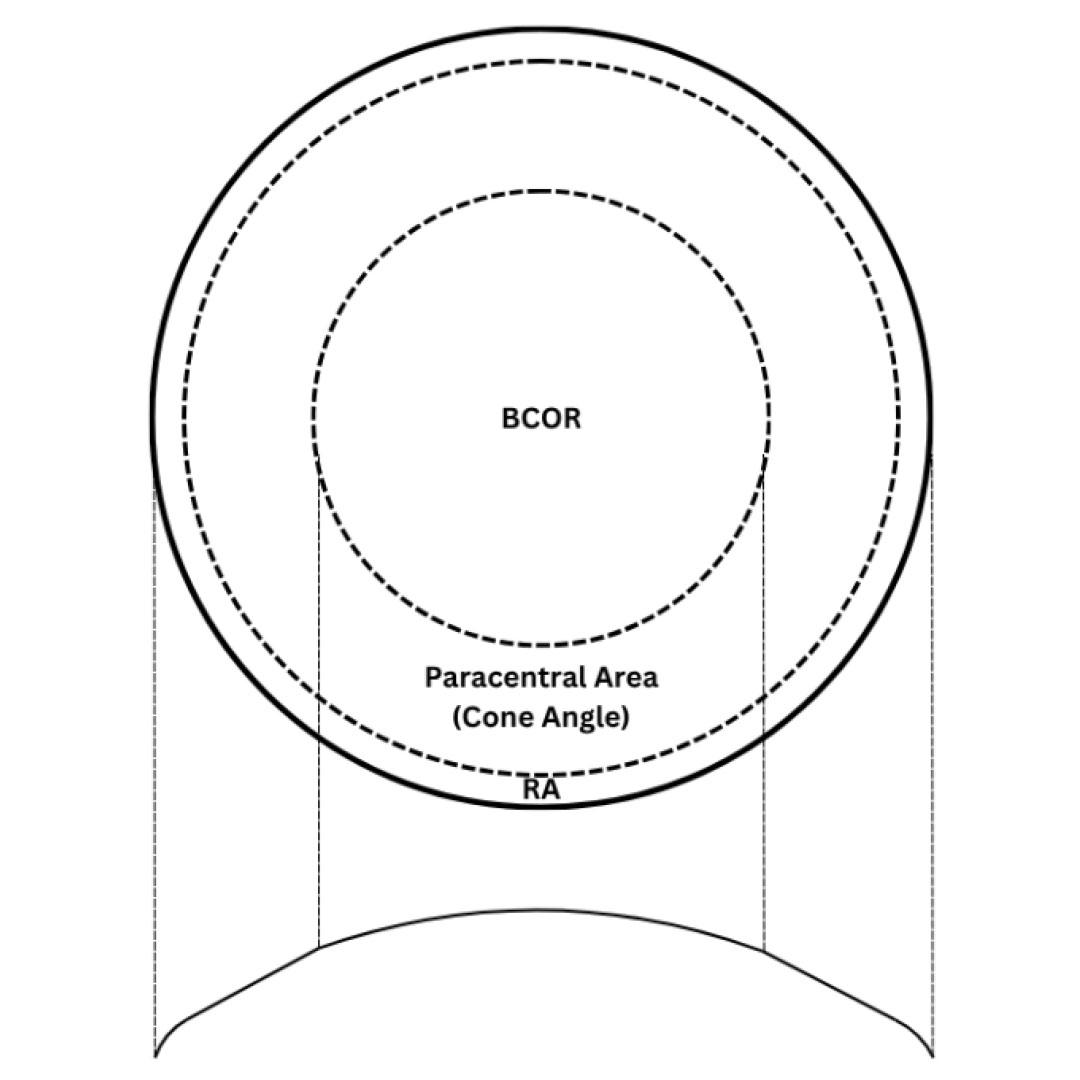
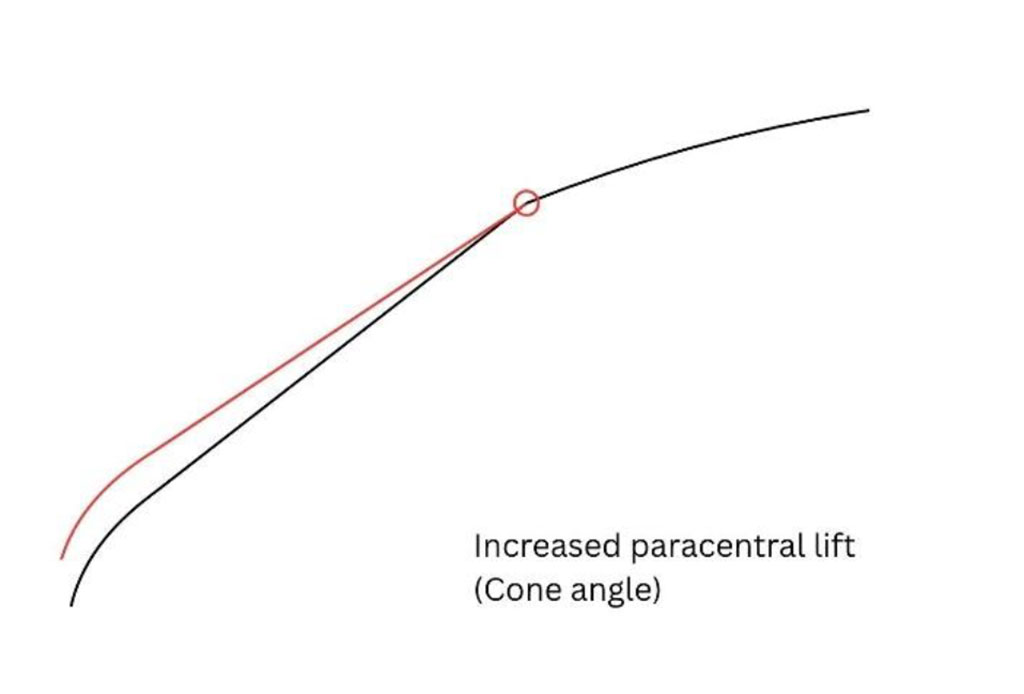
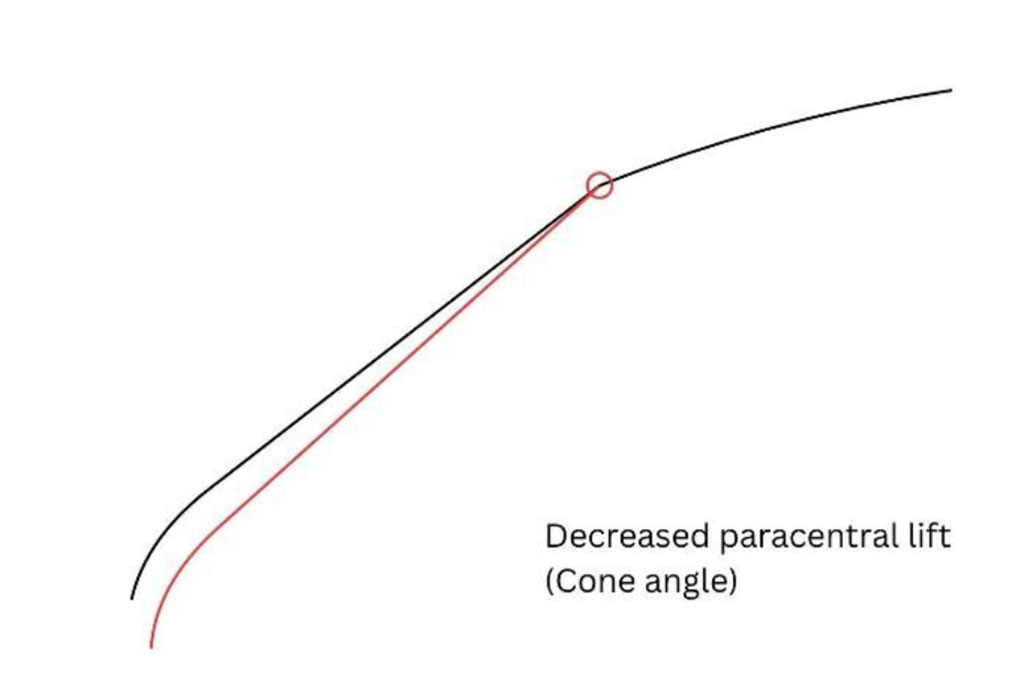
The Centra PGA design is divided into three principal areas. The BCOR area is spherical and fitted to provide minimum apical clearance above the cornea. The paracentral area of the lens is designed to applanate the cornea tangentially, thereby assisting it to locate the lens as centrally as the corneal shape permits. The reverse aspheric zone, which produces a wider peripheral zone and thereby lessens lid sensitivity and lessens the likelihood of trapping foreign bodies under the edge of the lens.
Paracentral Lift
Reverse Aspheric Geometry
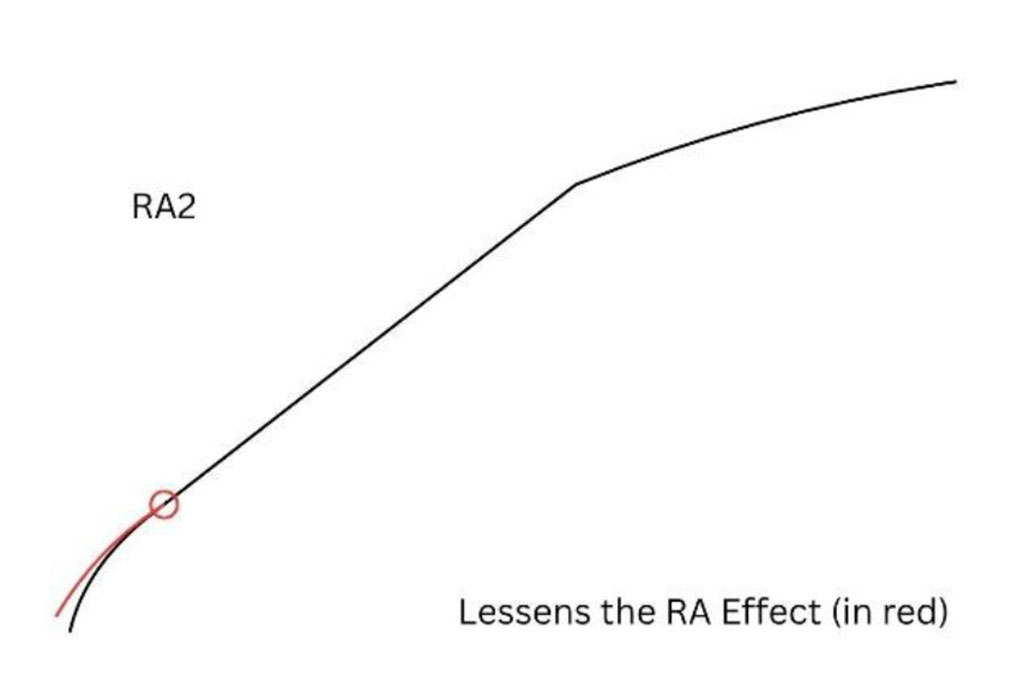
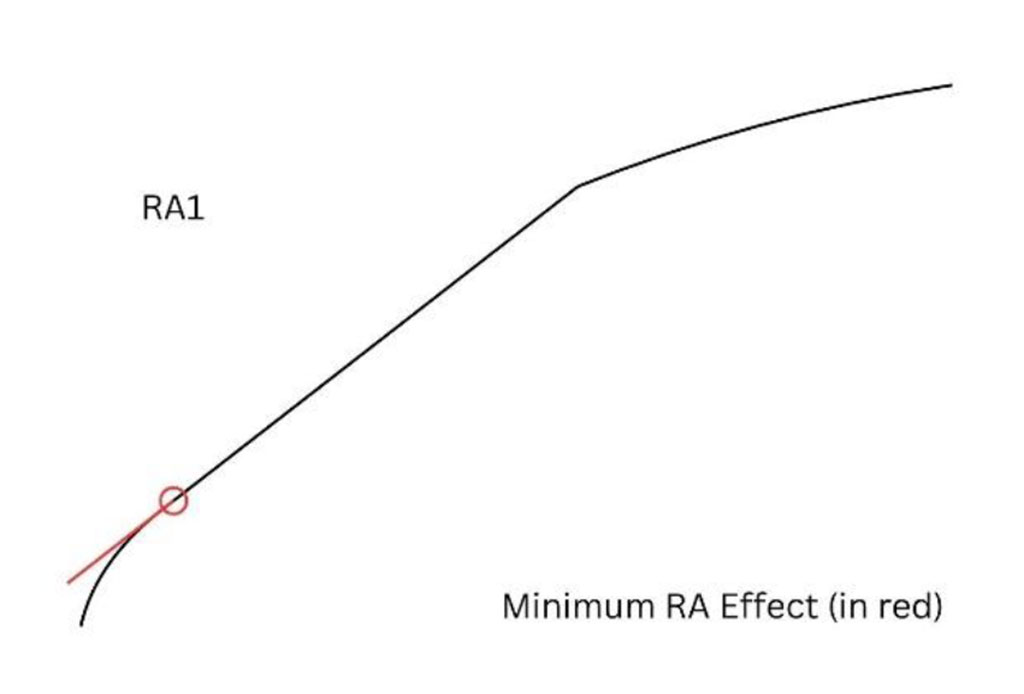
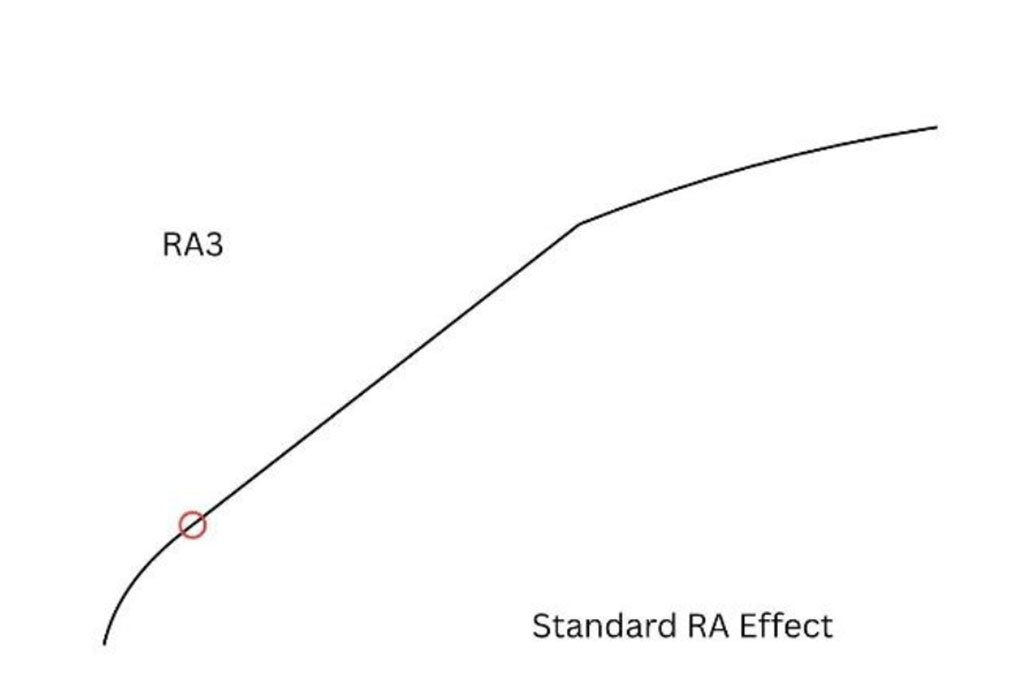
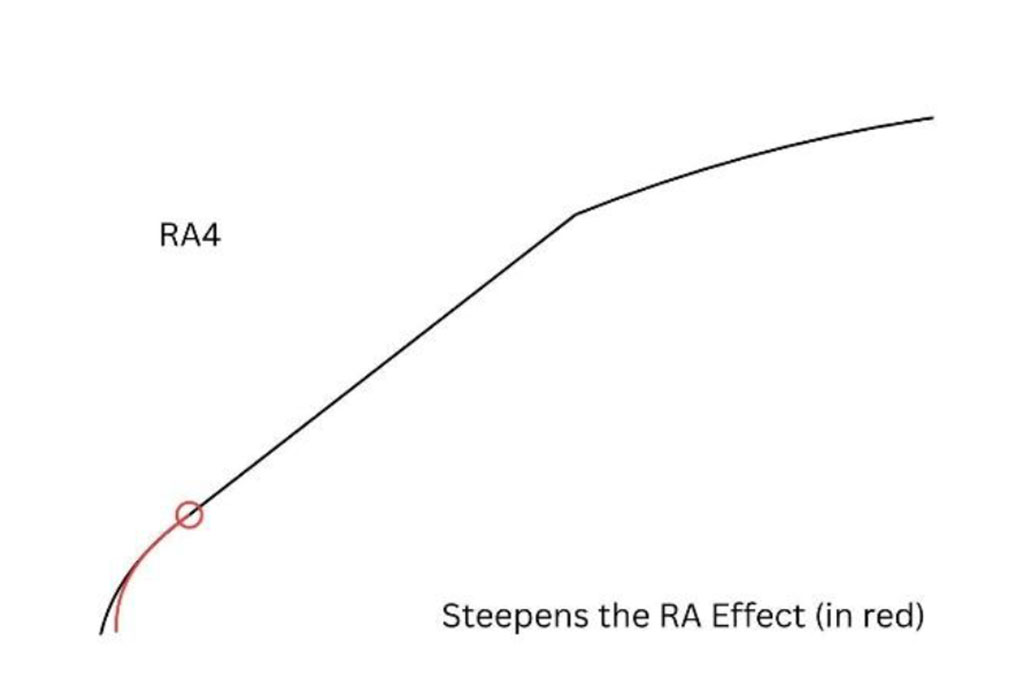
N.B. The standard RA range is between RA0 to RA9. Positive RA can be made upon request.
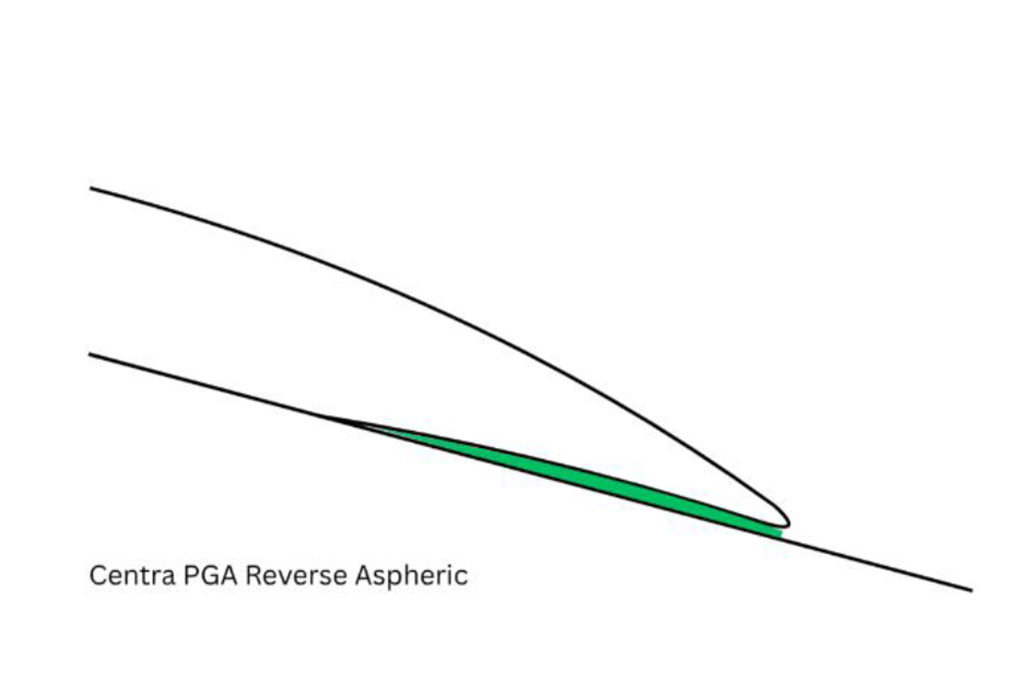
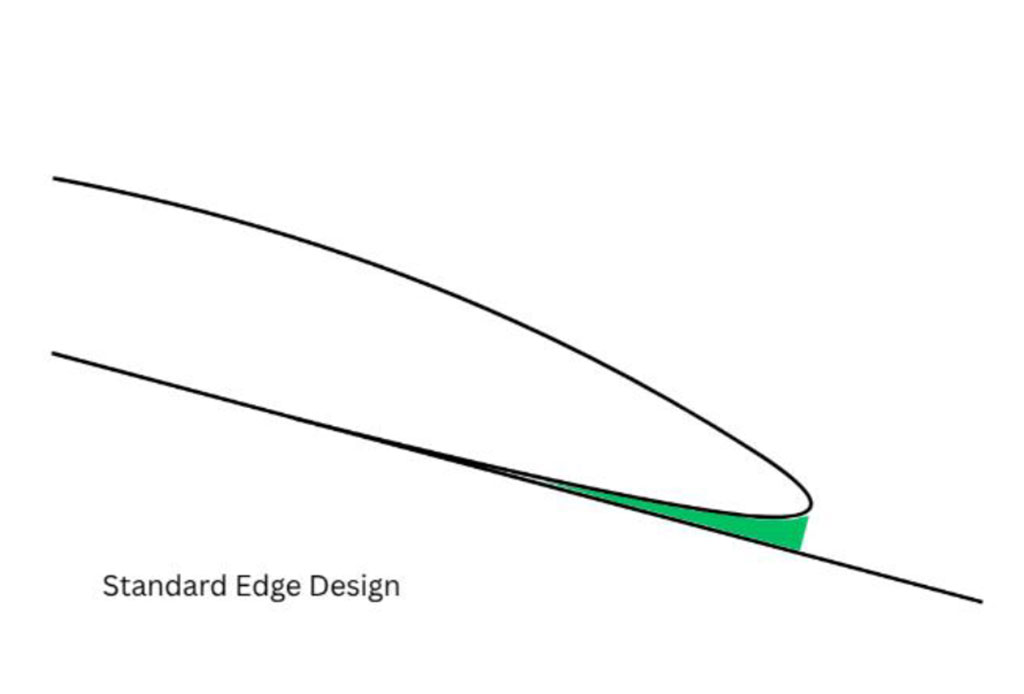
This reverse aspheric design creates a cushion of tears beneath the lens periphery for it to rest on. This makes for greater overall patient comfort and reduces dust being trapped beneath the lens periphery.
Centra PGA Fitting Procedure
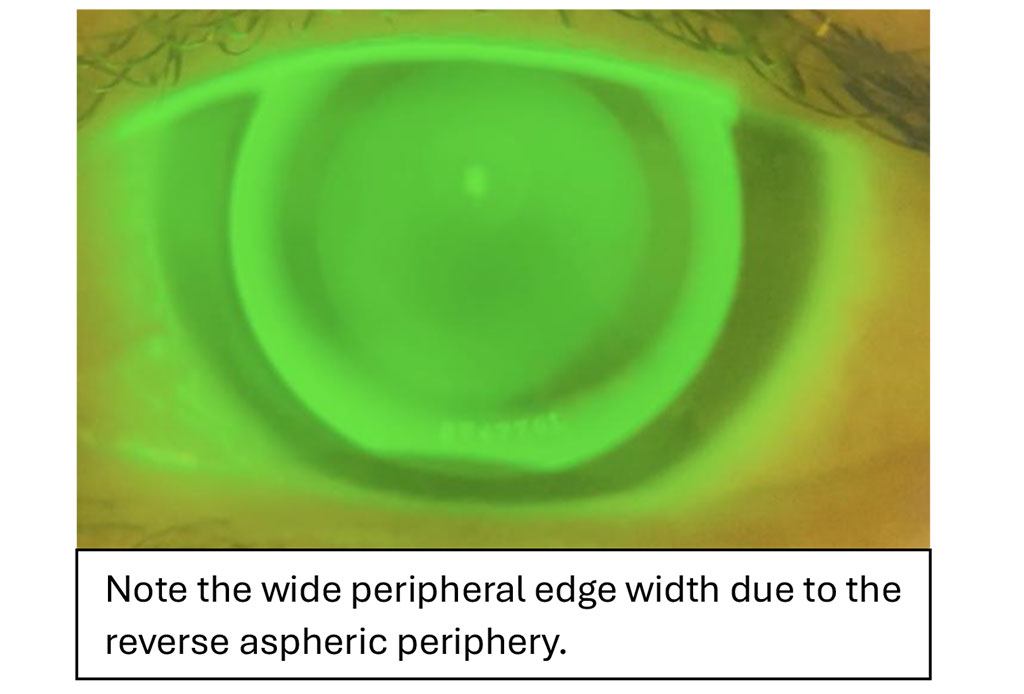
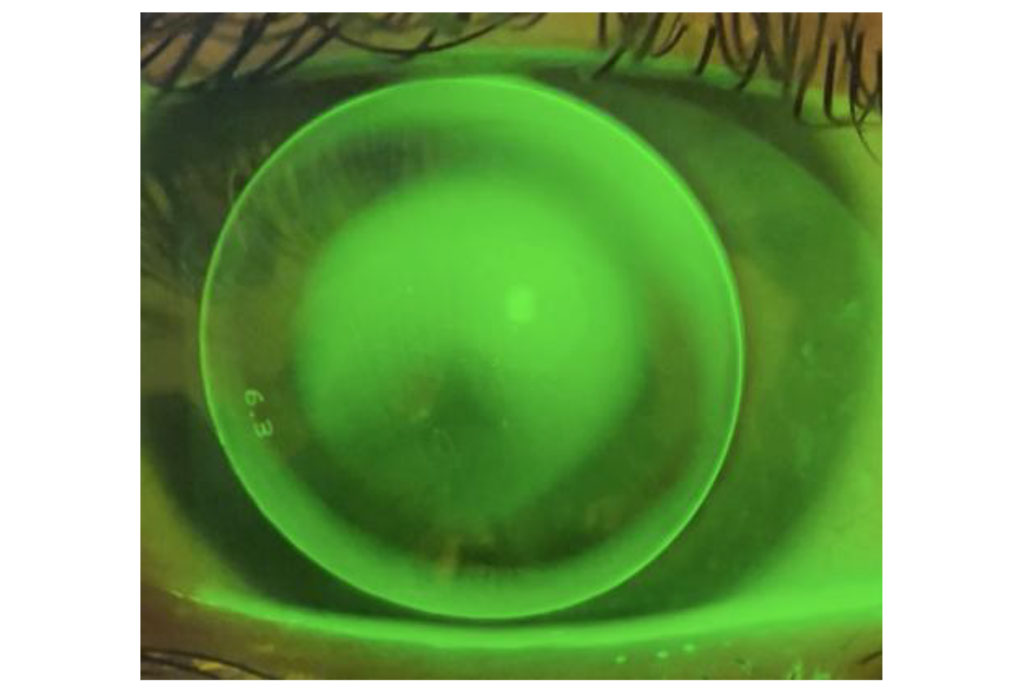
Optimal Fit
- Apical clearance is observed.
- Adequate applanation on the paracentral cornea 360 degrees.
- Sufficient edge lift and width.
- Locate over the central corneal area with sufficient vertical movement on blinking.
Step 1: Diagnostic Lens Selection
Objective: Select a base curve that achieves slight apical clearance over the apex of the cornea.
- Start with a base curve close to mid K. Consider starting closer to steep K, the larger the difference between flat and steep K.
- If there is apical touch, try a steeper BOZR until clearance is achieved.
- If there is excessive apical pooling and/or bubbles forming under the BOZD, flatten the BOZR until light clearance is achieved.
Note: You will need to assess the apical clearance whilst the lens is centered over the apex of the cornea.
Step 2: Paracentral Fit
Objective: To achieve adequate applanation on the paracentral cornea 360 degrees.
- If there is excessive stand-off in the paracentral area, order a decreased lift.
- If there is excessive pressure in the paracentral area, order an increased lift.
- If the applanation on the paracentral cornea is asymmetrical, consider a bi-sym, toric periphery, quad-sym or bi-toric.
- If a clear toric fitting pattern is observed, the lens consistently drops low, or there is excessive vertical movement, a toric periphery (TSP) may be required. A minimum amount of TSP to be considered is 0.6.
- See schematics at the end of the fitting guide that demonstrate TSP’s and Bi-syms.
- Please get in touch with one of our technical consultants for assistance or more information.
Step 3: Edge lift and Movement
Objective: To achieve an even edge width and lift and healthy lens movement for tear exchange.
A narrow edge width is typically associated with a paracentral area (cone angle) that is too steep, whilst an excessively wide edge lift is associated with a paracentral area that is too flat.
- A standard increased lift will increase the cone angle by 2 degrees.
- A standard decreased lift will decrease the cone angle by 1.5 degrees.
- The paracentral area can also be specified as an equivalent base curve.
E.g. A Centra PGA with a base curve of 7.0mm shows an optimal fit over the corneal apex but a tight paracentral and peripheral fit. A 7.0mm base curve can be ordered in combination with a mid-periphery (paracentral) of a 7.3mm base curve Centra PGA. This is equivalent to increasing the cone angle.
Edge lift (height) often goes hand-in-hand with edge width. However, if the edge width looks optimal but the height appears too low or high within the last 0.5mm of the overall lens diameter, a flatter or steeper RA (reverse aspheric geometry) can be requested.
- The standard RA effect of a Centra PGA is RA3.
- RA4 steepens the RA whilst RA2 flattens the RA.
N.B.
1) Edge lift is often best adjusted by changing the paracentral lift or cone angle rather than modifying the RA value.
2) The Centra PGA has a wider peripheral zone width incorporated into its reverse aspheric design than is used in many other contact lens designs.
Evaluating Vision
- Perform a sphere-cyl over-refraction over the chosen diagnostic lens.
- The final BVP is a combination of the trial lens BVP + over-refraction found.
- Consider the best sphere power if a low magnitude of cylinder is found.
- A standard diameter PGA of 9.0mm has a BOZD of 5.25mm.
- A 7.0mm base curve Centra PGA with a 9.0mm diameter and 5.25mm BOZD has a cone angle of 68 degrees.
Centra PGA Bi-sym and Toric Periphery (TSP)
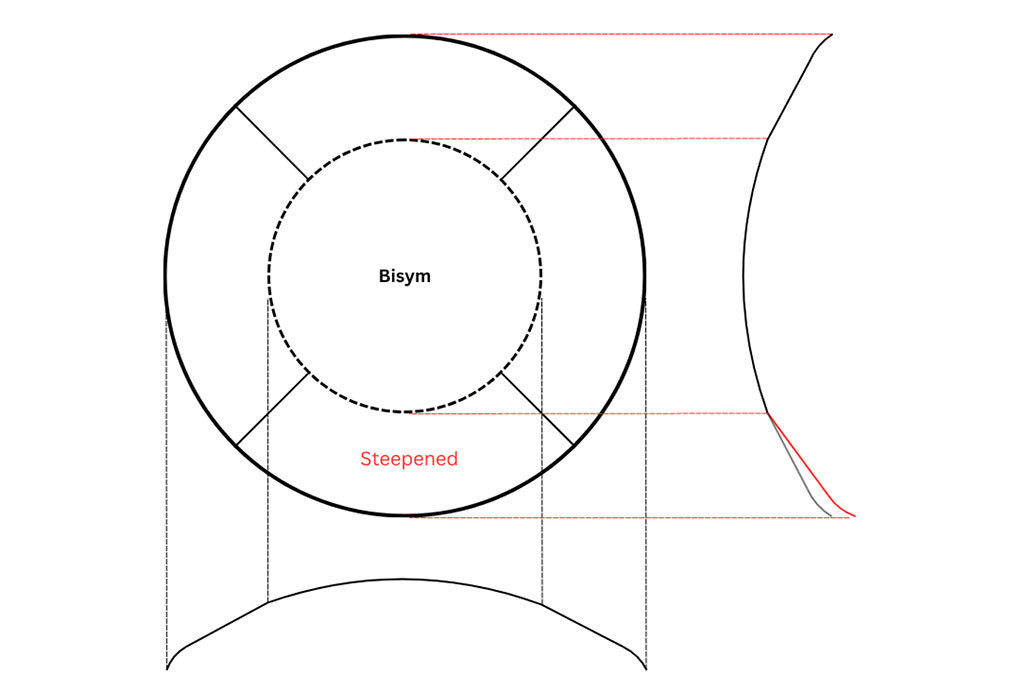
A Bi-sym 0.7 will steepen the inferior paracentral quadrant by 0.7mm.
Use the following values as a general guide:
- Bi-sym 0.4 for mild inferior lift-off or edge lift
- Bi-sym 0.7 for moderate inferior lift-off or edge lift
- Bi-sym 1.2 for a just-visible tear-break in the inferior quadrant
- Bi-sym >1.5 for a constant, visible tear-break in the inferior quadrant
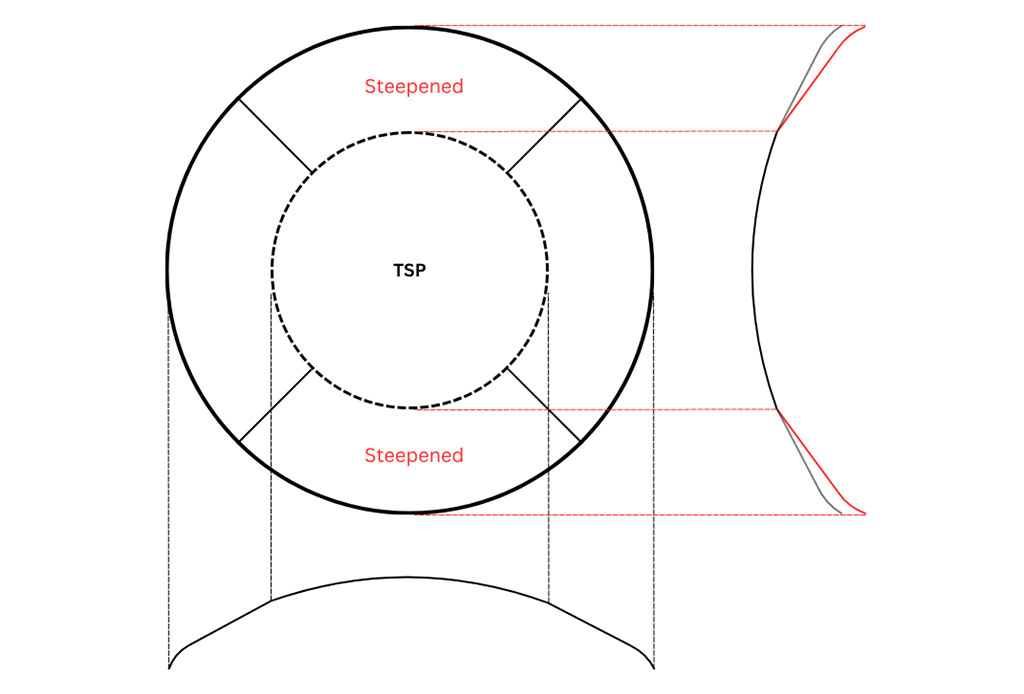
A TSP 0.8 will steepen the superior and inferior paracentral quadrants by 0.4mm each.
Use the following values as a general guide:
- TSP 0.6 for a mild toric fluorescein pattern
- TSP 1.0 for a moderate toric fluorescein pattern
Quad-syms are also available and are specified from axis 0 to 270 (counter-clockwise).
Example: Specified by paracentral or mid-P values:
- 7.3 RA3 / 6.7 RA2 / 7.3 RA3 / 6.7 RA2.
Example: Specified by cone angles:
- 68.9 RA3 / 66.9 RA3 / 68.9 RA3 / 66.2 RA3.
N.B. If the RA value is not specified, the lens will be manufactured with a default value of RA3.
Optic Diameters vs Tangential Cone Angles
The following is a table of standard tangential cone angles for different combinations of base curves and back optic zone diameters.
The PGA lens design is not limited to the values in the table. Cone angles can be altered within limits.
| X | Optic diameter in mm | ||||||||
| 5.25 | 5.75 | 6.0 | 6.25 | 6.5 | 6.75 | 7.0 | 7.25 | ||
| Base curve in mm | 6.0 | 64.1 | 61.4 | 60.0 | 58.6 | 57.2 | 55.8 | 54.3 | 52.8 |
| 6.1 | 64.5 | 61.9 | 60.5 | 59.2 | 57.8 | 56.4 | 55.0 | 53.5 | |
| 6.2 | 65 | 62.4 | 61.1 | 59.7 | 58.4 | 57.0 | 55.6 | 54.2 | |
| 6.3 | 65.4 | 62.8 | 61.6 | 60.2 | 58.9 | 57.6 | 56.2 | 54.9 | |
| 6.4 | 65.8 | 63.3 | 62.1 | 60.8 | 59.5 | 58.2 | 56.8 | 55.5 | |
| 6.5 | 66.2 | 63.6 | 62.5 | 61.2 | 60.0 | 58.7 | 57.4 | 56.2 | |
| 6.6 | 66.6 | 64.2 | 63.0 | 61.7 | 60.5 | 59.2 | 58.0 | 56. 7 | |
| 6.7 | 66.9 | 64.6 | 63.4 | 62.2 | 61.0 | 59.8 | 58.5 | 57.2 | |
| 6.8 | 67.3 | 65.0 | 63.8 | 62.6 | 61.5 | 60.2 | 59.0 | 57.8 | |
| 6.9 | 67.6 | 65.4 | 64.2 | 63.1 | 61.9 | 60.7 | 59.5 | 58.3 | |
| 7.0 | 68.0 | 65.8 | 64.6 | 63.5 | 62.3 | 61.2 | 60.0 | 58.8 | |
| 7.1 | 68.3 | 66.1 | 65.0 | 63.9 | 62.8 | 61.6 | 60.5 | 59.3 | |
| 7.2 | 68.6 | 66.5 | 65.4 | 64.3 | 63.2 | 62.0 | 60.9 | 59.8 | |
| 7.3 | 68.9 | 66.8 | 65.7 | 64.6 | 63.6 | 62.5 | 61.4 | 60.2 | |
| 7.4 | 69.2 | 67.1 | 66.1 | 65.0 | 64.0 | 62.9 | 61.8 | 60.7 | |
| 7.5 | 69.5 | 67.5 | 66.4 | 65.4 | 64.4 | 63.3 | 62.2 | 61.2 | |
| 7.6 | 69.8 | 67.8 | 66.8 | 65.7 | 64.7 | 63.6 | 62.6 | 61.5 | |
| 7.7 | 70.1 | 68.1 | 67.1 | 66.1 | 65.0 | 64.0 | 63.0 | 61.9 | |
| 7.8 | 70.3 | 68.4 | 67.4 | 66.4 | 65.4 | 64.4 | 63.3 | 62.3 | |
| 7.9 | 70.6 | 68.7 | 67.7 | 66.7 | 65.7 | 64.7 | 63.7 | 62.7 | |
| 8.0 | 70.8 | 68.9 | 68.0 | 67.0 | 66.0 | 65.0 | 64.0 | 63.1 | |
| 8.1 | 71.1 | 69.2 | 68.3 | 67.3 | 66.4 | 65.4 | 64.4 | 63.4 | |
| 8.2 | 71.3 | 69.5 | 68.5 | 67.6 | 66.7 | 65.7 | 64.7 | 63.8 | |
| 8.3 | 71.6 | 69.7 | 68.8 | 67.9 | 67.0 | 66.0 | 65.0 | 64.1 | |
| 8.4 | 71.8 | 70.0 | 69.1 | 68.2 | 67.2 | 66.3 | 65.4 | 64.4 | |
| 8.5 | 72.0 | 70.2 | 69.3 | 68.4 | 67.5 | 66.6 | 65.7 | 64.8 | |
| 8.6 | 72.2 | 70.5 | 69.6 | 68.7 | 67.8 | 66.9 | 66.0 | 65.1 |
NOTE: A numerical decrease in angle steepens the cone.
Example:
1. A standard diameter PGA of 9.0mm has a BOZD of 5.25mm.
2. A 7.0mm base curve Centra PGA with a 9.0mm diameter and 5.25mm BOZD has a cone angle of 68 degrees.
WARRANTY
Corneal Lens Corporation NZ LTD guarantees all CLCNZ made lenses against all defects in materials and manufacturing for 30 days from the original invoice.